
What generative AI academic editing tools actually do to your manuscript
Generative tools clean up grammar in seconds and quietly rewrite what a sentence claims. Here is where the line falls between the two, and how to keep the second thing from happening to your manuscript.
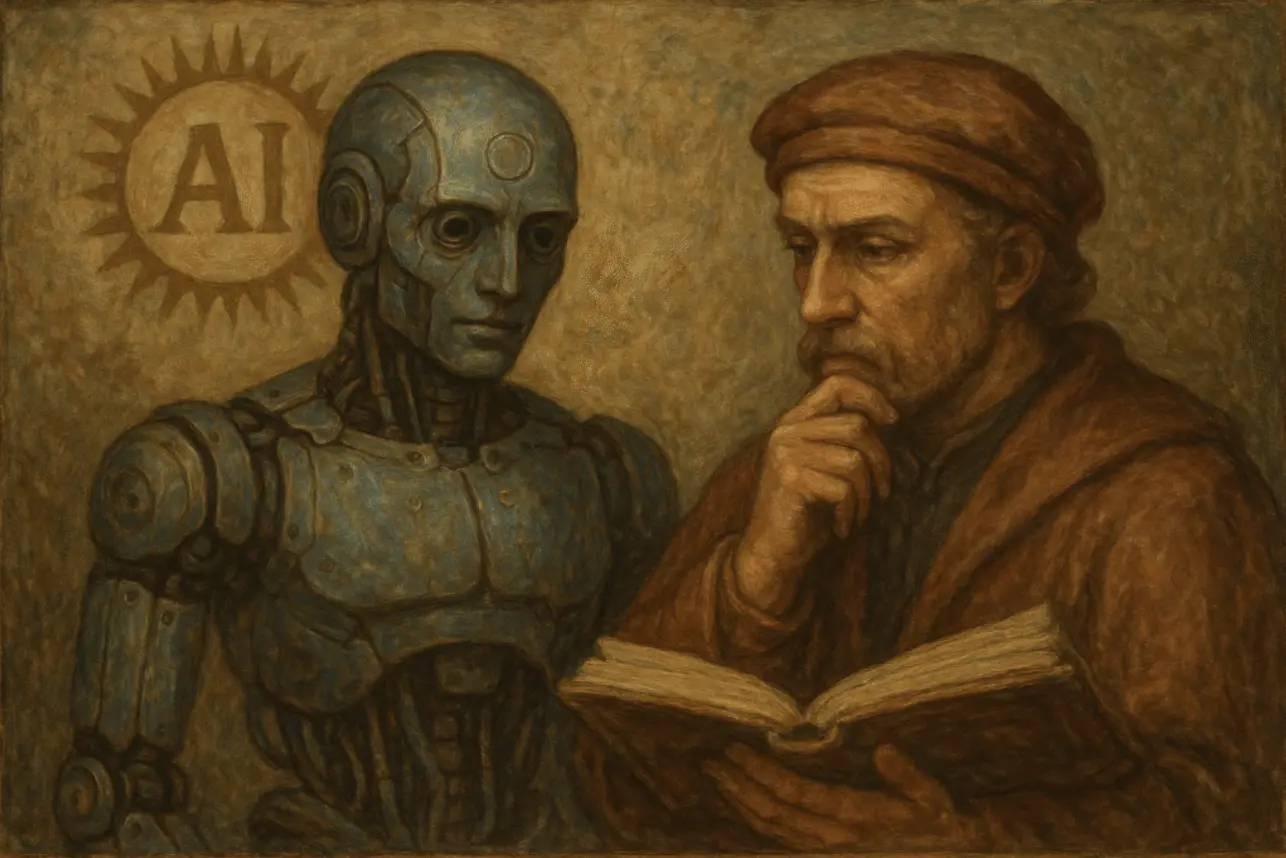
A generative model will clean up a paragraph in a few seconds. It will also, now and then, change what that paragraph claims, and the change is easy to miss when you are working in a language you learned second.
That gap is the subject here. Generative AI academic editing tools are good at a narrow band of work and unreliable outside it, and the border between the two sits somewhere most authors do not expect.
What these tools are actually doing
Underneath the brand names, all of these tools run one operation: predicting the next word from everything that came before. They take no view of your argument, and checking one hypothesis against another is simply not the operation they run. They do well where the most ordinary wording happens to be correct.
The products authors reach for fall into two groups. ChatGPT, Claude, Gemini and Perplexity are general assistants. QuillBot, Writefull, Paperpal and Wordvice AI are built for academic prose, and Writefull's language engine is now used by publishers including Cambridge University Press and Springer Nature to screen submitted manuscripts before peer review.
Underneath, all of them do one thing. They estimate which word is likely to come next, given everything before it.
They learned to do that from an enormous pile of text. They hold no position on your argument. They cannot check whether your third hypothesis contradicts your second, because checking is not the operation they perform.
Hold on to that and the rest becomes predictable. A statistical machine is strong wherever the usual phrasing is the right answer, and weak wherever the right answer depends on what you meant.
Copyediting and substantive editing are different jobs
Copyediting is surface work: spelling, punctuation, tense, article use. A rule or a style sheet settles each question, and your findings never enter. Substantive editing works on the argument, asking whether a key term holds one meaning across 40 pages and whether a shortened sentence still claims only what your data support.
Copyediting is surface work: spelling, subject-verb agreement, punctuation, tense, article use, consistent hyphenation, one spelling variant throughout. The right answer comes from a rule or a style sheet. It does not depend on your findings.
Substantive editing works on the argument. Does a key term keep one meaning across 40 pages? Is a hedge doing real work, or padding? After you shortened that sentence, does it still claim only what your data support?
Generative AI academic editing tools handle much of the first job. They imitate the second convincingly, and the imitation is the part that costs you.
Here is the shape it usually takes. You write that a treatment was associated with a lower relapse rate. The tool tightens the sentence and gives you back reduced the relapse rate. Cleaner, shorter, and a different claim. Your reviewer will notice even if you do not.
The same thing happens to terminology. Over 8,000 words a model will offer participants, then subjects, then respondents, because repeating a word looks like a flaw to a system trained on general prose. In a methods section those are three different things.
A human editor working on the argument checks a set of questions that never enters the model's calculation: whether the abstract still matches the conclusions after both were revised, whether a term introduced on page 3 is used the same way on page 31, whether a sentence you compressed now overstates what you measured.
| Task | Where the tools hold up | Where they fail |
|---|---|---|
| Proofreading | Typos, agreement errors, doubled spaces, some structural regularity | British and American spelling mixed in one document, inconsistent hyphenation, footnotes skipped entirely |
| Substantive editing | Shortening overbuilt sentences, cutting repetition, raising register | One key term used two ways, a sentence quietly made to claim something else, quoted material "corrected" |
| Style and tone | Making prose more formal | Flattening an author's voice, reaching for the highest-frequency academic phrases, tone shifted where it should not be |
| Formatting | Simple fixes such as double spaces | Note numbering, tables, figures, mixed citation styles, broken page layout |
| Long documents | Short passages, abstracts, single sections | Anything past a few thousand words: coherence drifts and edits stop agreeing with each other |
| Facts and sources | A starting point for a search | Invented references, statements attributed to the wrong person, sources picked to fit your thesis |
Five ways they break
They break in five places. Suggestions come out of statistics, so your argument plays no part in them, coherence drifts across long documents, formatting and footnotes take damage, and training that rewards guessing produces citations that do not exist. The corpus these models learn from is also turning partly synthetic.
1. The suggestions are probabilistic. The model picks whichever continuation scores highest across the text it was trained on. Your argument does not enter the calculation. Choosing your phrasing this way is a little like choosing a child's name from search autocomplete. Statistically defensible, and empty.
2. Long documents drift. Frontier models now advertise context windows of roughly 1 million tokens, about 750,000 words. Advertised capacity and usable capacity are separate numbers. Liu and colleagues documented the pattern in "Lost in the Middle": models retrieve information reliably from the beginning and the end of a long input and much less reliably from the middle. Long-context benchmarks through 2026 keep showing recall falling off well before the advertised ceiling. In practice, a few thousand words into a document with a sustained argument and repeated terminology, the edits stop matching each other.
3. Hallucination is built into the incentives. A 2025 paper from OpenAI and Georgia Tech argues that language models hallucinate because "the training and evaluation procedures reward guessing over acknowledging uncertainty" (Kalai, Nachum, Vempala and Zhang, September 2025). A model graded only on how often it is right learns to answer rather than abstain. So when it does not have your source, it produces a plausible one: a citation that does not exist, a quotation assigned to the wrong scholar, a date adjusted to fit the sentence.
4. Document structure is the first casualty. Heading hierarchy, bullet levels, paragraph breaks, emphasis, indents, quotation-mark style, tables, figures. A .docx file that goes through a generative rewrite usually comes back with several of these damaged, and footnotes are the most common loss. The text may read well and still be unusable as a submission file.
5. The training data is turning synthetic. Spennemann estimated in 2025 that "at least 30% of text on active web pages originates from AI-generated sources, with the actual proportion likely approaching 40%" (arXiv:2504.08755).1 He reached the figure by tracking marker phrases, among them delve into, and he cautions that the upper end is probably inflated. Either way, models increasingly learn from model output, and the phrasing they push you toward is the average of a corpus that is itself part machine.
A word about AI detectors
A detector scores how predictable a text is, word by word. It has no way to identify authorship. Prose that is formal, regular and built from common constructions scores as machine-like, which describes a great deal of careful academic writing by authors working in English as an additional language.
Liang and colleagues tested several widely used detectors in 2023 and found that "these detectors consistently misclassify non-native English writing samples as AI-generated, whereas native writing samples are accurately identified." Vanderbilt University switched off Turnitin's AI detection in August 2023 over the false-positive rate, and other universities followed.
There is a practical consequence for how you use these tools. A generative rewrite pushes your prose toward exactly the high-frequency phrasing that predictability scores punish. The pass that smooths your English can raise your detector score while adding nothing to your argument.
Targeted correction behaves differently from wholesale rewriting. Fixing article use and verb tense in sentences you built yourself leaves your syntax and your choices in place. Asking a model to regenerate a paragraph replaces them with the statistical average of everyone else's paragraph.
How to use them without damaging the manuscript
Two habits limit the damage. Keep the tool on short passages rather than the whole file, and read every change it made, including the ones you did not ask for. Within those limits it saves real time: breaking up overbuilt sentences, proofreading a paragraph or two, testing phrasings you cannot get right, converting passive to active.
These are the jobs where generative AI academic editing tools earn their place:
- Breaking a long, multiply subordinated sentence into shorter ones.
- Testing 2 or 3 phrasings of a sentence you cannot get right.
- Converting passive to active, then checking that the new subject is the correct one.
- Proofreading 1 to 3 paragraphs at a time.
- Smoothing a paragraph: connectives, sentence order, where to split.
- Finding synonyms when a word keeps repeating.
- A first pass on terminology, verified afterward against real sources.
- Suggesting where to begin a literature search.
Two habits keep the damage down. Work in short passages, never on the whole file. And read every single change, including the ones you did not ask for.
That second habit is harder than it sounds. Bad AI edits read smoothly, which is precisely what makes them bad, and an author who is not a professional editor will wave a fair number of them through.
Used inside those limits, these tools save real time. Turned loose on a full manuscript, they hand back a document that reads beautifully and argues slightly differently from the one you wrote. Whether the machine can take over the editor's job at all is a bigger question, and we work through it in can AI replace human copyediting.
If you would rather have a human editor read the manuscript before you submit it, request a quote.