
Publish where you want: academic English editing for non-native speakers
Every sentence in a research paper carries weight, and the language you write in matters as much as the argument you make. Here are the first-language habits that stall a manuscript at review, and what editing clears away.
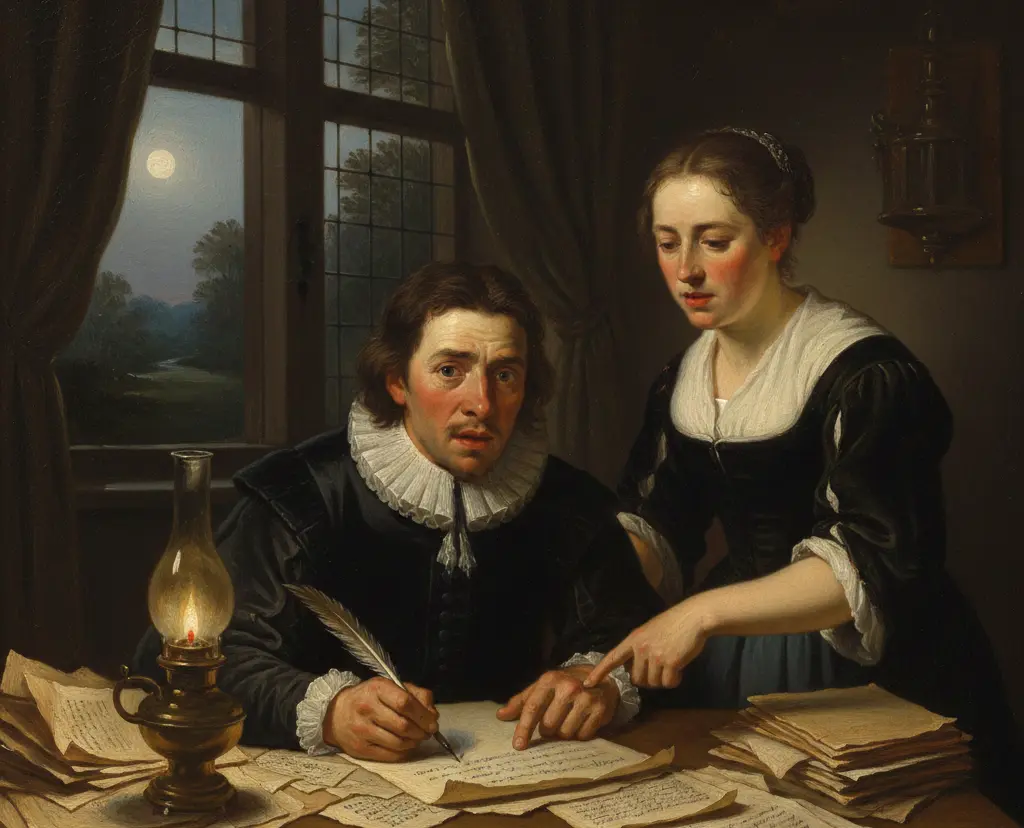
Every sentence in a research paper carries weight. That is why the language you write in matters as much as the argument you make. It matters most when English is not your first language, because the manuscript has to clear that gap before anyone gets to the science. Some excellent papers never reach print. The research was sound. The findings were new. What sank them was the writing, and specifically the habits authors carry over from their first language: invisible to the author, obvious to the reviewer. Here is how to catch them first.
The trap you set for yourself
Daily fluency in English does not carry you through a journal article. The costly errors are the habits you repeat without noticing, such as the chain of of phrases that genitive-heavy languages push you toward. Each one is grammatical, and each one slows a reader down where a possessive would do the same work.
Many researchers use English fluently all day. Email, conferences, teaching, small talk at the coffee urn. So they assume the same command will carry them through a journal article.
Academic prose asks for something else, especially in journals that turn away most of what arrives. Any reader catches a glaring error. The expensive ones are the habits you apply without noticing: words and structures that feel ordinary in your own language and turn stiff, or opaque, once you carry them across word for word.
One habit turns up constantly: a chain of of phrases. Languages that build long genitive strings, Polish and Russian and Turkish and Persian among them, push authors toward a literal English equivalent. A Polish sentence meaning an assessment of the significance of technology's influence on the development of society comes out as this:
The evaluation of the significance of the impact of technology on the development of society.
Grammatical. Also strange to read.
The possessive, which some readers know as the Saxon genitive, does the same work in half the space:
The evaluation of technology's impact on society's development.
Why this happens so often
Three habits share one cause: the easier route. An of chain leaves every word in place, while the possessive asks you to rearrange the sentence and get the apostrophe right. Word-by-word self-translation and a quick look at an AI summary save time the same way, and both cost you accuracy.
From what we see in manuscripts, the of chain wins because it is easier. The possessive looks harder. It asks you to move the sentence around, and it asks you to know when the apostrophe takes an s and when it stands alone. An of chain leaves every word exactly where it sits.
The habit costs you later. A reviewer wading through form is not thinking about your argument.
The second pattern is the do-it-yourself translation.
Authors who translate their own work usually end up with something longer than the original and vaguer. That comes from working word by word, without the constructions a native writer reaches for by reflex.
Many languages prefer a light verb plus a noun where English has one verb. Polish mieć wpływ, French avoir un impact, Spanish tener un impacto. Translate that straight and you get to have an impact on. English already has affects. Multiply the pattern across 8,000 words and you have added hundreds of words that carry no content. The reader wades. The reviewer, who reads first, wades before anyone else.
The third pattern is too much trust in AI.
Someone checking a fact stops at the first result to save time. Google's AI Overviews are the common case now. They gather and condense what the web says on a topic, and they get things wrong, including outright fabrication. An AI Overview can list a writer's works correctly and give the wrong first name in the same breath. Miss that, publish it, and the mistake belongs to you.
Eight rules we work by
Eight rules do most of the work. Keep subject, verb, object in plain order, prefer the active voice, match tense to the job, go easy on progressive forms, cut surplus words, keep the register formal, mark logic with connectives where the argument needs it, and quote exactly when the wording of a source is your evidence.
These are the rules we keep in front of us when we open a manuscript.
Subject, verb, object. Keep the order plain. Plain order reads faster.
Prefer the active voice. It is more direct and easier to follow. Some journals and some sections, methods above all, still expect the passive, so check the journal's guide before you convert everything.
Match the tense to the job. Present simple for established knowledge and for what your paper does: This study examines. Past for what you did and what you found: We collected, The samples showed. Present simple is the most neutral register English offers, which is why it carries your framing sentences.
Go easy on progressive forms. Is doing is rare in academic prose and usually slows a sentence down. Stacked -ing phrases do the same. One gerund is ordinary English. Three in a sentence is a rewrite.
Be concise. Say it once. Surplus words dilute the point and spend the reader's patience.
Be formal. Professional, precise vocabulary. Write many or numerous rather than a lot of.
Use connectives. Words like however, thus, and therefore show the reader how one sentence follows from the last. Use them where the logic needs marking. A connective on every sentence turns into noise.
Paraphrase where paraphrase is the right tool. Restating a source in your own words proves you understood it. In the humanities, where the wording of a source is the evidence, quote it and quote it exactly.
What clear language buys you
Clear language buys you the reviewer’s attention. When the prose holds up, the whole review goes to your argument, and remarks on the writing, if any come, arrive as minor revisions. A reviewer with attention to spare treats thin spots in the substance more generously, and the comment you get back is worth more.
Here is the hard part. You know your own text too well. You know what you meant, so your eye slides over the habitual errors, especially the ones carried in from your first language. Your brain supplies the meaning the page never actually delivers.
The reviewer's eye supplies nothing. It lands on exactly what yours skipped.
So what do you do if you want the language to get out of the way? Hand it to someone who reads it cold. Editing leaves your style where it is and clears the text around it. Your voice and your precision come through the process intact. The prose picks up the ease of English written by someone who grew up in it.
Then the reviewer spends the whole review on your argument. If remarks on the writing arrive at all, they arrive as minor revisions.
By our own records, 98% of the manuscripts we edit are accepted by journal editorial offices without further language corrections. Every piece of research deserves to reach an editor in the best shape you can give it.
And a reviewer who sees prose that holds up tends to be generous about thin spots in the substance. When they do find one, the comment is far more useful to you, because they had the attention to spare.
Want to know what this would look like for your manuscript? Request a quote for academic English editing.